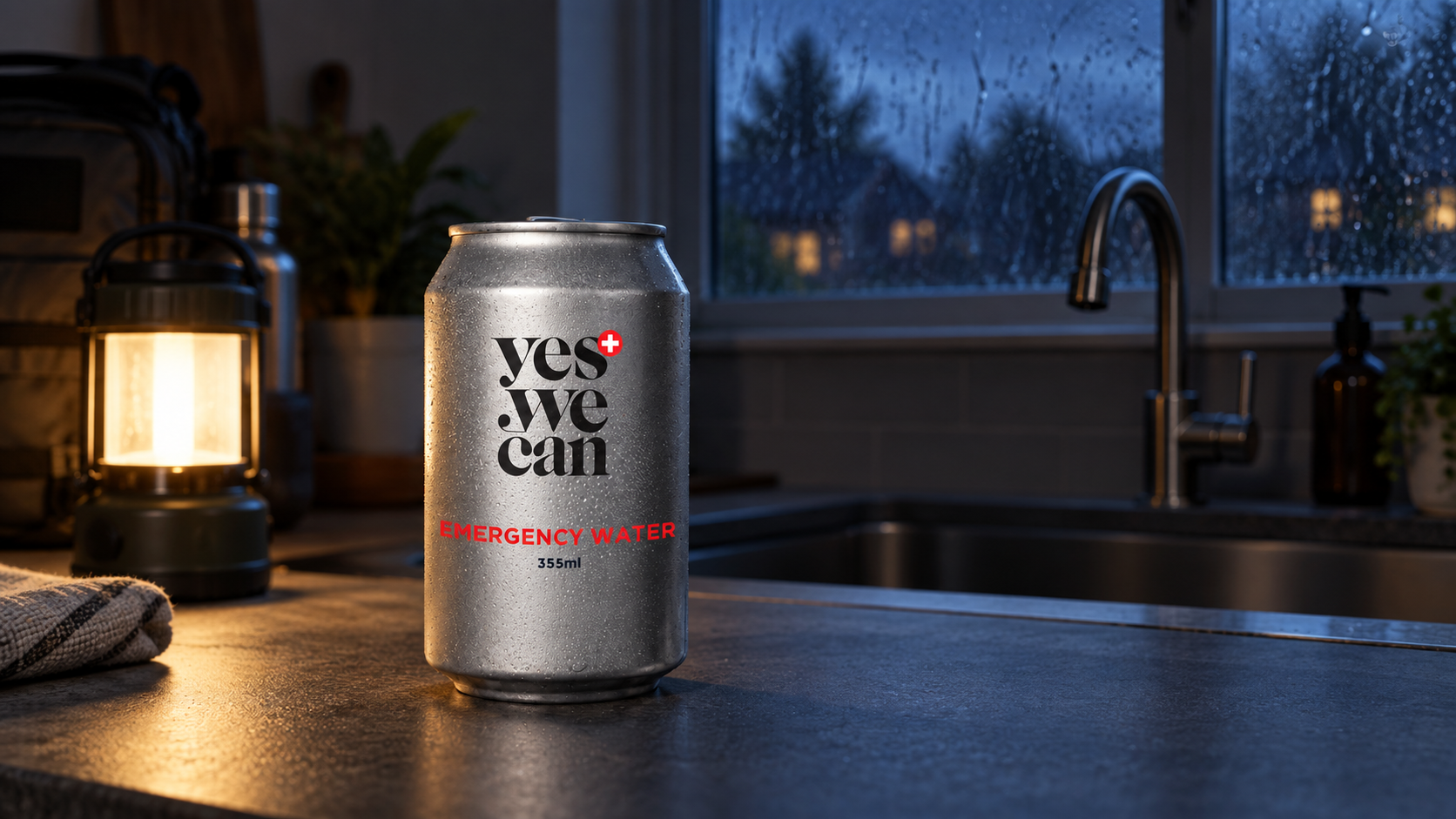
Tap water can remain safe during a power outage if your municipal water system is operating normally. Check your local utility for advisories. If you use a private well, the outage can stop your pump and affect water pressure, so use your emergency drinking water supply and follow well-specific guidance.
September is a useful time to review that supply. August and September typically bring the most storms in Atlantic Canada, according to the Canadian Hurricane Centre. The same preparation helps when winter storms or unexpected equipment failures interrupt everyday services.
Here’s what to check—and how much water to have ready.
Does water still work when the power is out?
Sometimes. Your electricity and water supply are separate services, but equipment that moves and treats water can depend on power.
| Your water supply | What an outage can mean | What to do |
|---|---|---|
| Municipal or city water | Service may continue through stored water and backup systems. | Check your utility’s service notices and water advisories. |
| Apartment or condo | Building equipment may affect whether water reaches your unit. | Check with building management as well as the utility. |
| Private well | The electric pump may stop, and water pressure can fall. | Use stored drinking water and follow Health Canada’s well guidance. |
Municipal systems can have substantial backup arrangements. Toronto, for example, uses tanks and reservoirs to help maintain supply during emergencies, and its R.C. Harris treatment plant has standby power. However, those protections do not establish the condition of every community’s water supply. City of Toronto water information, treatment plant facts
In apartment buildings, running water may be affected even when the municipal system remains operational. Your property manager can explain your building’s backup arrangements. Toronto emergency guidance
How do you know whether tap water is safe?
Check official local updates before assuming your water supply is unaffected. Start with your water utility, municipality or public health unit. Look for notices covering your address.
If authorities report a problem—or you have reason to suspect contamination—use a known safe alternative while you get instructions.
Water’s appearance is not a reliable safety test. Health Canada notes that well water can contain contaminants without a noticeable change in taste, smell or clarity. Health Canada well safety guidance
Also remember: electricity returning does not automatically end a water advisory. Wait for the issuing authority to lift it and follow any instructions for flushing plumbing or connected appliances.
What should you do with well water during a power outage?
Avoid using the water remaining in your well system while the power is out. Drawing water can reduce pressure and increase the chance of contamination.
Health Canada advises well users not to open faucets, shower or flush toilets during an outage. If the system loses all pressure, or water stops coming from the taps, have the water tested before using it.
After power returns, follow Health Canada’s instructions for flushing the lines and checking treatment equipment. If pressure was lost, testing is still necessary before resuming use. Health Canada’s instructions for wells during power outages
A stored drinking-water reserve helps you avoid drawing down the system while the pump is unavailable.
What if there is a boil water advisory?
Follow the exact notice. A boil water advisory, a do not drink advisory and a do not use advisory require different actions.
-
Boil water: Follow the boiling instructions before consuming tap water, or use a safe alternative.
-
Do not drink: Use an alternative for drinking and food preparation. Boiling will not make harmful chemical contamination safe.
-
Do not use: Avoid tap water for all purposes covered by the notice; contact with it may be hazardous.
During an advisory, do not use water or ice from refrigerator dispensers connected to the affected supply. A regular household filter does not replace the instructions in a boil water advisory. CDC drinking water advisory guidance
What if you cannot boil water without electricity?
Use unopened commercially packaged drinking water from a safe source.
If you have a safe way to heat water, follow the local advisory. Canadian guidance identifies a rolling boil for at least one minute as effective against waterborne pathogens. Allow the water to cool before use. Boiling does not remove every type of contamination. Health Canada boil water guidance
Having drinking water ready means you have an option when boiling is unavailable.
How much emergency water do you need for 72 hours?
Plan for at least six litres per person for three days, plus additional water for cooking and cleaning.
Health Canada recommends two litres per person per day as part of a 72-hour emergency kit. It also recommends considering another two litres per person daily for cooking and cleaning, with extra water for pets. Health Canada emergency food and water guidance
| Household size | Basic three-day supply | Including extra water for cooking and cleaning |
|---|---|---|
| 1 person | 6 litres | 12 litres |
| 2 people | 12 litres | 24 litres |
| 3 people | 18 litres | 36 litres |
| 4 people | 24 litres | 48 litres |
| 5 people | 30 litres | 60 litres |
| 6 people | 36 litres | 72 litres |
For a family of four, that’s 24 litres for the basic supply, or 48 litres including the additional cooking and cleaning allowance. Adjust for your household’s needs and local recommendations.
To calculate your basic reserve:
Number of people × number of days × 2 litres = litres to store
For example: 3 people × 3 days × 2 litres = 18 litres, before adding cooking, cleaning and pet needs.
Our guide to daily emergency water needs provides more planning context.
Build a water reserve you can actually use
The best place to start is with the quantity your household needs, then choose packaging and storage that work in your home.
Use this checklist:
-
Count your total litres. A package count alone can be misleading because sizes vary.
-
Keep the reserve accessible. Make sure everyone knows where it is.
-
Follow the product’s storage instructions. Protect containers from damage.
-
Inspect your supply regularly. Check packaging and applicable dates.
-
Replace what you use. Keep the planned quantity available.
Individually sealed options can help divide drinking water between household members or emergency bags. Yes We Can Emergency Water contains purified still water in 355 mL aluminum cans. A 12-can case holds 4.26 litres, so count it toward your total rather than treating one case as a complete three-day supply.
Keep unopened cans in a clean, dry, temperature-controlled location and follow the current storage and inspection guidance supplied with the product.
Before the next outage
Save your water utility’s contact details, check how your home receives water, and count the litres already in your emergency kit.
A little preparation now gives your household a practical option if safe tap water becomes unavailable.