Updated September 10, 2026
Water preparedness starts with a practical question: if your usual drinking water supply were interrupted, what would you use?
That question matters as El Niño strengthens. In its September 3 update, the World Meteorological Organization forecasts a very strong event developing toward the end of 2026, with conditions expected to persist through February 2027. The outlook raises concerns about changing rainfall, drought, flooding and extreme heat across different regions. Read the WMO forecast.
For households, businesses and community organizations, this is an opportunity to review emergency water supplies before a local disruption occurs.
At Yes We Can Emergency Water, we believe preparation should be practical: understand your risks, calculate your needs and keep drinking water where people can access it.
What is El Niño, and why does it matter worldwide?
El Niño is a natural climate pattern involving unusually warm surface water in the central and eastern equatorial Pacific Ocean. It can influence weather far beyond the Pacific, changing rainfall and temperature patterns across continents.
Its effects vary by location and season. A stronger El Niño does not automatically mean a more severe outcome in every country. Other climate patterns and local conditions also influence what happens.
For the 2026–2027 season, use the global outlook as a reason to prepare, then follow your national weather service and local water authority for guidance specific to your area. WMO explains the regional differences.
How can El Niño affect drinking water supplies?
The connection between El Niño and drinking water depends on the weather conditions a region experiences. Two concerns deserve particular attention.
Drought can reduce available water
Prolonged dry conditions can create shortages that affect drinking, cooking and sanitation. The World Health Organization identifies reduced access to water as a central health concern during drought. WHO’s drought overview.
For preparedness planning, consider how your household or organization would manage scheduled supply interruptions or limited access to its usual source.
An emergency drinking water reserve can help cover a temporary gap. Longer shortages require continuing coordination with water providers and community services.
Flooding can compromise water safety
Heavy rainfall does not guarantee access to safe drinking water. Floods can contaminate drinking-water facilities, leaving communities surrounded by water that is unsafe to use.
WHO advises against using floodwater for preparing food, brushing teeth or washing dishes. WHO’s flood safety guidance.
A water preparedness plan should therefore address both availability and safety: what you will drink if the tap stops working, and what you will use if authorities advise against drinking tap water.
How much emergency water should you store?
Start with the guidance issued by your local emergency-management or public-health authority. Then account for the number of people, the expected interruption and individual needs.
As one planning benchmark, the U.S. Centers for Disease Control and Prevention recommends at least one U.S. gallon—approximately 3.8 litres—per person per day for three days, and a two-week supply where possible. This covers drinking and other uses, including cooking and brushing teeth. More may be needed in hot climates, for certain health needs and for pets. CDC emergency water guidance.
A simple calculation is:
People × days × daily water allowance = total reserve
Using a rounded allowance of four litres per person per day:
| People | Three-day reserve | Seven-day reserve |
|---|---|---|
| 1 | 12 litres | 28 litres |
| 2 | 24 litres | 56 litres |
| 4 | 48 litres | 112 litres |
| 10 | 120 litres | 280 litres |
These examples help with planning; they are not a universal requirement. Separate your drinking-water allocation from other water needs so your reserve matches how it will actually be used.
Build a water preparedness plan that works in practice
A useful reserve needs more than a quantity on paper. Think through access, responsibility and replenishment.
For households
Identify where you will keep your main reserve and how household members will reach it. Plan separately for supplies you might carry during an evacuation.
Include everyone in the calculation, and account for pets and any additional needs. Make sure another household member knows where the water is stored and when it should be checked.
For workplaces, hotels and schools
Base the plan on the people who may be present during an interruption. Include employees, guests, students, contractors or visitors as appropriate.
Assign responsibility for checking stock and distributing it. Consider whether supplies can be accessed after hours and whether each building or floor needs its own allocation.
For community and relief organizations
Work backward from the intended distribution point. Confirm who will receive the water, how much is required, where it will be stored and who will handle delivery.
For international orders, verify destination requirements, freight arrangements and expected arrival dates early. A reserve becomes useful when it reaches the people it is intended to support.
Where Yes We Can Emergency Water fits
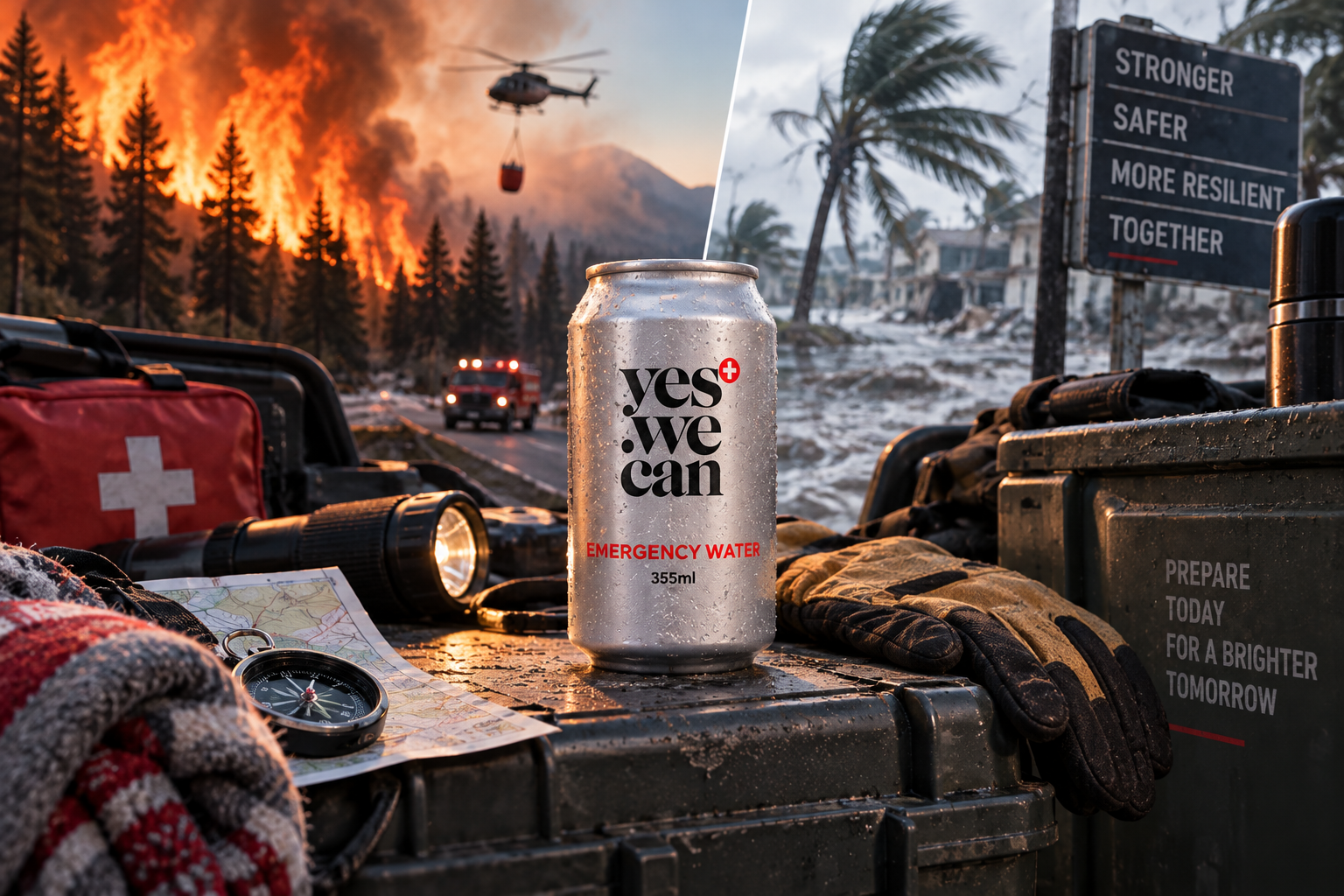
Yes We Can Emergency Water provides purified still water in individual 355 mL aluminum cans for emergency kits, household reserves, workplaces and continuity plans.
Individual portions can help organize drinking-water allocations across people and locations. Each can carries a production batch code for traceability, and case and pallet options are listed through our website.
To convert a planned drinking-water allocation into cans:
Drinking-water litres ÷ 0.355 = cans required, rounded up
For example, a 12-litre drinking-water allocation requires 34 cans, providing 12.07 litres. This is a packaging calculation; your total needs should come from your preparedness plan.
Follow the product’s current storage instructions and applicable Registered Batch Support terms when organizing your reserve.
What should you do if a water advisory is issued?
Follow the exact instructions from your local water provider or public-health authority. Different advisories require different actions.
Boiling can kill germs, but it cannot make water contaminated with fuel or toxic chemicals safe. If that type of contamination is suspected, use an alternative safe source and seek official guidance. CDC guidance on emergency water safety.
Keep official alert channels in your preparedness plan so everyone knows where to find updates.
Frequently asked questions
Will El Niño cause a water shortage where I live?
A global El Niño forecast cannot determine whether a specific community will experience a shortage. Local rainfall, existing water resources and infrastructure all matter. Follow regional forecasts and your water provider’s notices.
Is canned water suitable for an emergency kit?
Canned drinking water can form part of an emergency reserve. Choose quantities that meet your plan, follow the manufacturer’s storage instructions and check your supplies regularly.
How do I calculate emergency water for a business?
Multiply the number of people you expect to support by the planned coverage period and the daily allowance recommended for your circumstances. Account separately for operational uses beyond drinking water.
Prepare your water reserve before you need it
The El Niño 2026–2027 outlook is a useful moment to review your readiness. Start by counting the people you need to support, choosing a coverage period and checking the water you already have available.
Whether you are preparing a household kit or coordinating supplies across multiple sites, having a clear plan makes the next step easier.
Explore Yes We Can Emergency Water and plan your drinking-water reserve.