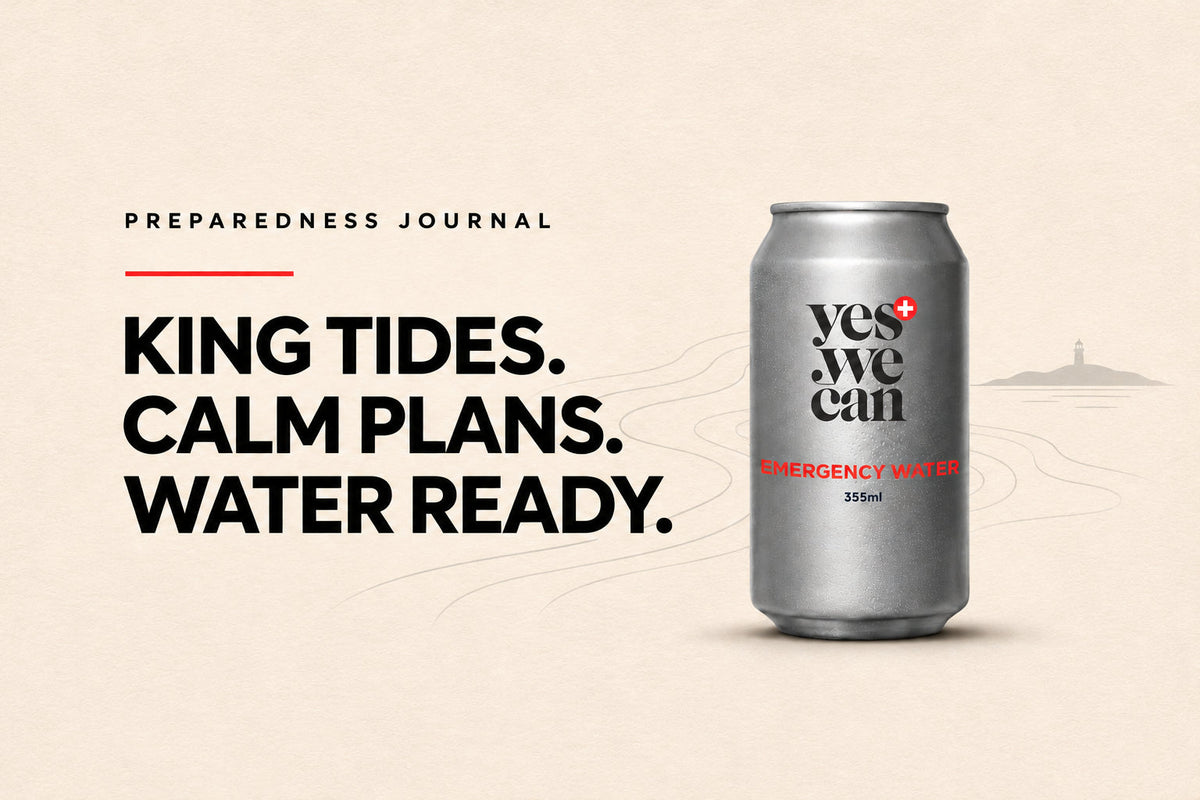
King tide preparedness starts with a local question: could unusually high coastal water affect the places your household relies on? A shoreline road, an access point or the route to a relative’s home may matter as much as the distance from your own front door to the sea.
For drinking water, the useful task is straightforward. Check the reserve already in your home, choose an accessible storage location and agree how you will find any water-service instructions. A coastal high-water notice gives you time to review those arrangements.
Why Delta’s November update matters
On November 23, 2026, the City of Delta described preparations for king tide and storm season, including temporary flood barriers and sandbag availability. Its announcement identified Beach Grove, Boundary Bay and Westham Island as coastal areas receiving preparedness information ahead of high tides expected to begin November 24. Read the City’s November 23 release.
A separate notice published November 21 identified November 24–December 2 as the high-water period and asked residents to keep clear of flood protection measures. The dated high-water notice is the place to check for local updates. These announcements describe potential impacts; they do not establish that flooding has occurred at every listed location.
What is a king tide?
“King tide” is a popular term for an exceptionally high tide, rather than a formal scientific category. NOAA explains that higher tides are associated with the Moon and Sun’s gravitational effects and particular points in their cycles. See NOAA’s king tide explanation.
A storm surge is different: Delta describes it as a storm-driven rise in sea level. Its emergency management guidance explains that high tides and storm conditions can combine to produce elevated water and localized flooding. A tide date alone cannot tell a household exactly what will happen on its street.
Make a coastal household plan around access
Begin with the locations that connect your day: home, work, school, care arrangements and the people you check on. Read the official impact maps and local instructions together. Give one person responsibility for monitoring updates, with a backup if they are unavailable.
Discuss what you would do if a usual route were closed. Decide who would collect children or assist a household member with mobility needs. Keep key contacts on paper as well as on phones, and make sure everyone knows the agreed meeting or check-in arrangement.
Delta encourages residents to register for its emergency alerts. Other coastal communities have their own local channels. Save the correct page for your municipality or First Nation, alongside your water provider’s contact. Our guide to flood notices and household water planning explains how different instructions can apply at the same time.
Give drinking water its own place in the plan
A household reserve supports ordinary needs while you follow updates or manage an interruption. Count actual litres available, including partly used supplies, and separate drinking water from the water allocated to cooking and cleaning.
Health Canada recommends preparing for at least 72 hours with 2 litres per person per day, and suggests another 2 litres per person per day for cooking and cleaning. Add water for pets. For three people over three days, that means 18 litres for drinking plus another 18 litres for cooking and cleaning, before pet needs. Adjust for individual circumstances and local instructions. See Health Canada’s emergency water guidance.
Write the target and the amount on hand in the same place. If supplies are short, plan a manageable replenishment. Our litres-to-cans planning guide can help with the arithmetic. Include visitors or overnight carers when they are part of your household arrangements.
Review where your reserve is stored
Choose a location everyone can reach safely and keep the manufacturer’s instructions with the supply. Consider whether a low shelf, difficult stairway or crowded cupboard would make access awkward. Make changes while conditions are safe, rather than leaving the decision until water is approaching.
Yes We Can Emergency Water is available in 355 mL cans, with 4.26 litres in a 12-can case. Store unopened cans indoors in a cool, dry place, away from sunlight, heat, chemicals and strong odours. Do not freeze. Inspect periodically and do not drink from leaking, bulging, punctured or corroded cans, or cans with damaged seams.
Also decide what you can carry if instructed to leave. A household reserve and a portable bag have different practical limits. Our winter water storage guide covers why a vehicle or unheated garage needs particular consideration.
Keep coastal alerts and drinking-water advice separate
A high-water forecast does not, by itself, declare your tap water unsafe. Check any separate notice for your water system. If flooding affects the supply, follow the utility and public health authority’s instructions about permitted uses and safe alternatives.
HealthLink BC warns that floodwater can contaminate drinking water without a noticeable change in clarity, smell or taste. Its flood recovery guidance explains why confirmation from the responsible authority matters. Water looking normal is not a substitute for that confirmation.
Finish with a short readiness check
- Information: Save local coastal updates, emergency alerts and your water provider’s contact.
- People: Confirm check-ins and assistance arrangements.
- Water: Record drinking, cooking and cleaning quantities, with pets counted separately.
- Access: Review storage and what each person could carry.
- Safety: Follow closures and official evacuation instructions.
Canada’s flood preparedness guidance says to move away from floodwater, avoid driving through flooded roads and follow routes specified by officials. Do not delay an instructed evacuation to collect more supplies.
Common questions
Does a king tide mean my home will flood?
No single tide label predicts the outcome for a specific home. Use local impact information and updates for your location, and follow the instructions issued there.
Should I replace all my stored water because of a coastal warning?
Review condition, storage instructions and the quantity available. A warning is a reason to check the plan; it does not automatically make an undamaged, correctly stored reserve unusable.
Start with one useful action today: confirm the local information source, count your drinking water or agree on the household check-in. Small arrangements are easier to maintain when everyone understands them.