Discoloured tap water can stop an ordinary morning: you turn on the kitchen tap and the water looks different. Before making coffee or starting the washing machine, check what your water provider says about work in your area.
Water-main flushing and repairs can change the appearance of water temporarily. The useful response is to identify the local instructions, use an alternative drinking-water supply while you check, and know when to contact the utility. Colour alone is not a complete water-safety assessment.
A timely reminder from the West Shore
The Capital Regional District’s West Shore flushing notice was updated on November 20, 2026, at 9:37 a.m., listing streets in the Flatman area for that day’s work. The programme runs from October to December. The notice explains that flushing can bring temporary low pressure and discolouration, and tells residents to wait until crews have finished before running cold taps to clear affected water. See the CRD’s flushing notice.
That is a dated maintenance example, rather than a claim that those streets are still being flushed today. Check the current notice for your address. The practical lesson travels well: read the utility’s explanation before deciding what to do at home.
Why can tap water change colour after work?
Changing water flow can disturb material in distribution pipes. Winnipeg identifies water-main breaks, firefighting and flushing as possible reasons for those changes. Its discoloured-water guidance advises residents to avoid using affected water for drinking, preparing food and beverages, or laundry.
Local context matters. The CRD describes temporary discolouration associated with its flushing programme as not a health hazard, while still asking residents to wait for clear water before drinking, showering, washing dishes or doing laundry. That statement applies to the work described in its notice. It is not a blanket assurance about every unexplained change in another household’s water.
If you cannot find an explanation, contact your provider. Tell them when you noticed the change, whether it affects cold water, hot water or both, and whether nearby properties have reported it. These observations can help the utility direct your question without asking you to diagnose the cause.
Start with the notice for your water system
Look beyond a neighbourhood social-media post. Save the official utility page or service number and check the affected streets, work dates and instructions. In a shared building, ask the manager whether work inside the property could be involved.
- Confirm the location: Does the notice cover your address and the system supplying it?
- Check the timing: Are crews still working, or has the utility said work is complete?
- Read the action: Should you avoid using water, wait, flush a tap or follow a separate advisory?
- Keep the update route: Know where to check again if the situation changes.
Do not treat a maintenance notice and a boil water advisory as interchangeable. If an advisory applies, follow its instructions even if the water looks clear. Our guide to water advisory types explains why the exact wording matters.
Follow local flushing instructions
There is no single flushing time to copy into every situation. Your provider’s procedure should determine when to start, which tap to use and when to stop. Running taps while a local notice says to wait can work against the instructions you are trying to follow.
For example, Winnipeg recommends using cold water to check for clearing, rather than drawing sediment into a hot-water tank. Its procedure includes checking water in a light-coloured container, waiting 30 minutes if it remains discoloured, and contacting 311 if it has not cleared after two to three hours. Those are Winnipeg’s directions; use your own utility’s contact and procedure elsewhere.
If the appearance returns to normal but you still have concerns, ask the provider what to do next. Do not use appearance to cancel a separate drinking-water advisory yourself.
Keep drinking water available while you check
An accessible reserve makes a short interruption easier to manage. Put the water you will use for drinking where everyone can find it, and make sure anyone preparing meals knows which supply to use. Include water for pets and account for individual needs.
Health Canada recommends preparing for at least 72 hours with 2 litres per person per day, and suggests another 2 litres per person per day for cooking and cleaning. Increase the reserve for pets. For two people over three days, that is 12 litres for drinking, plus another 12 litres for cooking and cleaning, before pets. See Health Canada’s emergency water guidance.
Keep those categories separate when checking supplies. A drinking-water reserve should not silently become the entire household cleaning supply. Our litres-to-cans planning guide can help translate quantities into an inventory.
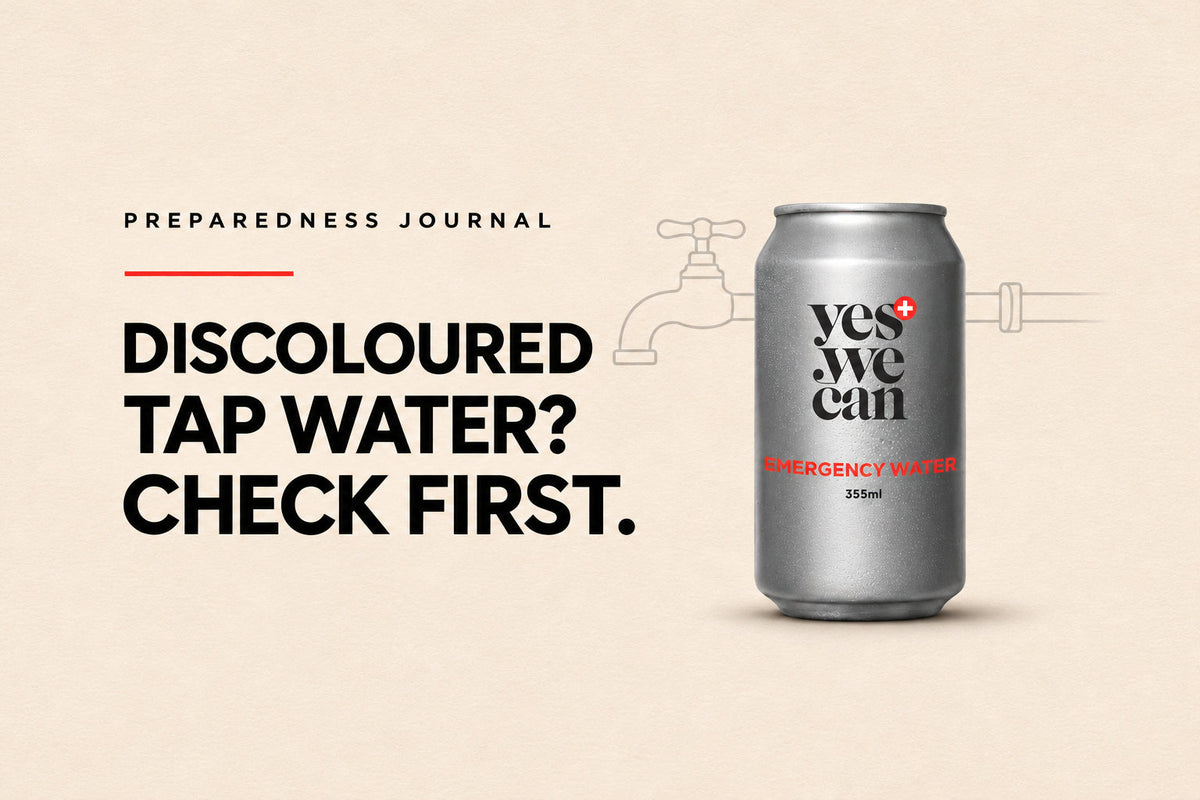
If canned water suits your plan, Yes We Can Emergency Water comes in 355 mL cans: a 12-can case holds 4.26 litres. Store unopened cans indoors, cool and dry, away from sunlight, heat, chemicals and strong odours. Do not freeze. Inspect regularly and avoid leaking, bulging, punctured or corroded cans, or damaged seams.
Common questions about discoloured tap water
Does brown tap water always mean a boil water advisory?
No. A change in appearance and an official advisory are different pieces of information. Check the provider’s notice and ask for guidance if the cause is unclear. Never decide an advisory is over because the water looks normal.
Should I leave every tap running until it clears?
Follow the utility’s specific procedure. It may tell you to wait until work finishes, use a particular cold tap and contact the utility if the problem continues. Avoid substituting an open-ended flushing routine.
What should I record after the interruption?
Note the official instructions you followed, any follow-up the provider requested and how much stored drinking water you used. Replenish what is needed and keep the utility’s contact with your household plan.
A small reserve and a reliable source of local information work together. When the water looks different, take a moment to check first.