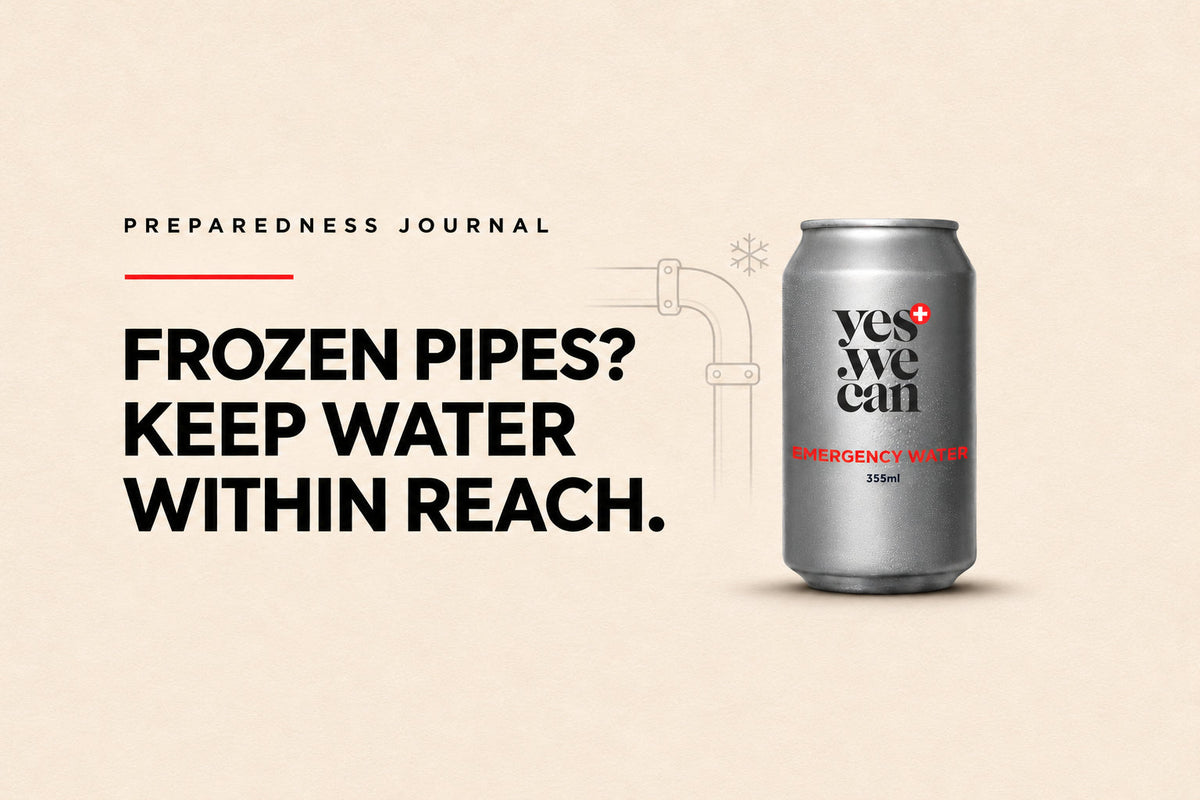
Frozen pipes can leave a household with no running water just when the day is getting started. Before breakfast, school or work, you need to work out who to call and where drinking water will come from while the problem is assessed.
A practical plan connects three things: prevention before prolonged cold, a clear response when taps stop flowing, and an accessible drinking-water reserve. You can organise these without predicting an emergency or taking on plumbing work beyond your abilities.
A timely cold-weather reminder
On November 24, 2026, Iowa American Water issued a reminder to prepare homes and plumbing for cold weather. The utility highlighted locating the main shut-off valve, reducing cold air around water lines and protecting exposed pipes. Its advice also included arranging checks on the property when residents are away. Read the dated utility announcement.
That is a seasonal preparedness message, not a forecast of a particular Canadian cold snap. For a Canadian example, Toronto’s frozen-pipe guidance, updated November 17, explains local prevention steps and how residents can seek help. Use your own municipality’s instructions for your home.
Before deep cold: give plumbing a quick review
Start with the areas you already know are difficult to keep warm. Iowa American Water identifies crawl spaces, garages, unheated rooms, basements and exterior walls as locations to check. Ask a qualified professional about protection where access or conditions make the work difficult.
Toronto recommends disconnecting outdoor hoses and, where there is a separate shut-off, turning off the outdoor supply and draining taps. Renters should confirm maintenance and after-hours contacts with their property manager.
Make the review useful to someone other than the person who usually manages repairs. Record where the main shut-off is and keep the plumber, property manager and water provider’s numbers together. If a valve is difficult to reach or operate, arrange professional help before you need it urgently.
No running water? Establish what you know first
Cold weather makes frozen plumbing a possibility, but it does not establish the cause of every interruption. Check the water provider’s service notices and ask the building manager about any work. Note when normal flow stopped and whether the issue appears at one fixture or throughout the home.
Have this information ready when you call:
- Location: Your address, unit number and the contact number where you can be reached.
- Timing: When the problem began and whether it has happened before.
- Observations: Which taps are affected and any visible leaking.
- Building arrangements: Whether a landlord, superintendent or maintenance team is already involved.
A short, accurate description is more helpful than a diagnosis you cannot confirm. Agree who will make the call, then share the instructions with everyone in the household so nobody starts a competing repair attempt.
Know when to involve a plumber or the utility
Responsibility depends on where the problem is and your local service arrangements. In Toronto, the City maintains the water service pipe between the street watermain and the property line; the owner or landlord is responsible from there into the home. Toronto residents can contact 311 for investigation. Other communities may use different processes.
If a pipe has burst or may burst, Toronto advises turning off the main supply if you can. Never use a blowtorch, propane heater or open flame to thaw plumbing. If you cannot safely assess or reach the problem, contact a licensed plumber and follow local instructions.
Keep household routines flexible while you wait. Let anyone providing care, preparing meals or collecting children know that the home has no running water. Discuss what arrangements will work if the interruption lasts longer than the first estimate.
Keep drinking water available during the interruption
A reserve gives you a way to cover immediate drinking needs while the plumbing is assessed. Count the water actually on hand, rather than relying on the number of cases you remember buying. Include partly used supplies and water already allocated to portable bags.
Health Canada recommends preparing for at least 72 hours with 2 litres per person per day and suggests another 2 litres per person per day for cooking and cleaning. Add water for pets and adjust for individual circumstances. For four people over three days, this means 24 litres for drinking, plus another 24 litres for cooking and cleaning, before pets. See Health Canada’s emergency water guidance.
Write those categories separately. Drinking water, cooking and cleaning water, and pet needs should each have a place in the inventory. Our litres-to-cans planning guide helps turn a household target into a clear count.
Store the reserve where winter will not undermine it
Choose a location everyone can find and reach safely. Think about the person who will carry the water as well as the space available. A reserve that requires moving heavy boxes or searching a locked storage area is harder to use during an interruption.
Yes We Can Emergency Water comes in 355 mL cans, with 4.26 litres in a 12-can case. Store unopened cans indoors in a cool, dry place, away from sunlight, heat, chemicals and strong odours. Do not freeze them. Inspect periodically and do not drink from leaking, bulging, punctured or corroded cans, or cans with damaged seams.
Our winter emergency water storage guide covers garages and vehicles in more detail. Keep the product’s care instructions with your household inventory so that replenishment and inspection are easy to repeat.
When water returns, close the loop
Follow any instructions from the plumber, building manager or utility about restarting use, checking repairs and reporting concerns. Check separately for any drinking-water notice affecting your address. Water flowing again does not cancel an advisory.
Record what you used from the reserve and replenish the gap. Note which contact was helpful, what access was needed and what would make the next interruption easier to manage. One clear improvement is enough to finish the review.
Common questions
Should I leave a tap running all winter?
Follow your utility’s specific advice rather than adopting a permanent routine. Toronto’s optional guidance relates to vulnerable taps when nighttime temperatures fall below −15°C and notes that the water used is chargeable. Check local conditions and instructions.
Does stored drinking water prevent frozen pipes?
No. Plumbing protection and a drinking-water reserve serve different purposes. One addresses the pipe system; the other supports household needs during an interruption.
Begin with a manageable check today: locate the right contact, review a vulnerable area or count your drinking water. A plan is easier to use when the people in your home understand it.