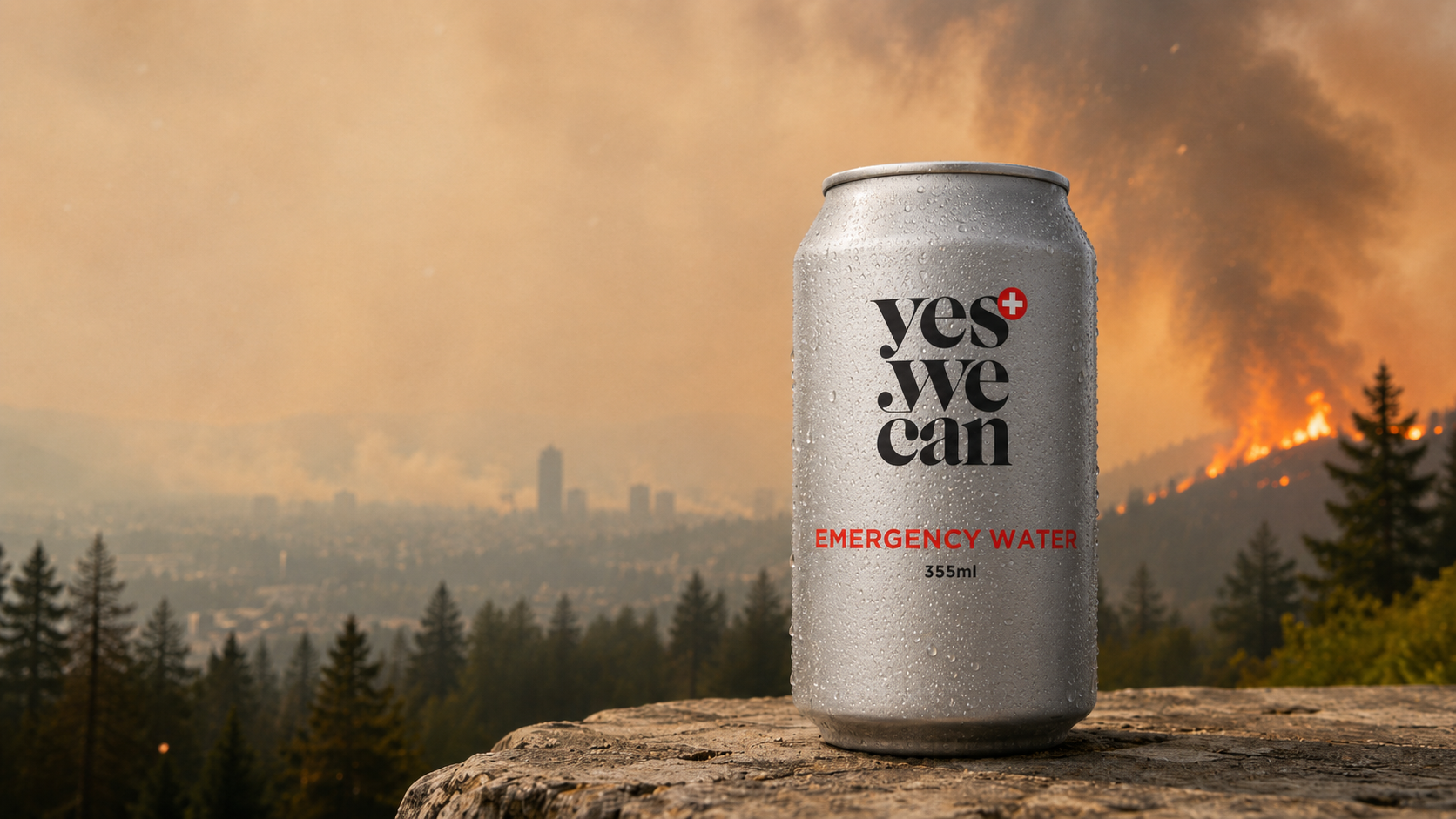
The sky changes colour. The air smells like a campfire. Health advisories appear on your phone, outdoor activities are cancelled and people are told to close their windows.
For millions of people across Canada and the United States, wildfire smoke is no longer a distant or occasional threat. It is becoming part of summer.
In July 2026, major wildfires in Ontario sent large plumes of smoke across Ontario and Quebec and into the American Midwest and Northeast. NASA satellite imagery captured smoke moving thousands of kilometres from its source, while communities from the Great Lakes to the Mid-Atlantic experienced unhealthy air.
At the same time, the United States is confronting its own wildfire activity, with dozens of large fires burning across multiple states. Canadian smoke and smoke from fires in Minnesota and other parts of the U.S. have combined to create widespread air-quality concerns.
The immediate advice is familiar: stay indoors, reduce strenuous activity, use appropriate filtration and wear a well-fitting respirator when necessary.
But wildfire preparedness should also include another essential question:
Is your emergency drinking water properly protected?
Water is often one of the first necessities affected when a disaster disrupts roads, electricity, municipal services or local supply chains. And during a wildfire, the risk is not limited to running out of bottled water at the store.
Fire can also affect the water system itself.
Wildfire Smoke Is More Than a Cloud of Ash
Wildfire smoke is a complex mixture of fine particles and gases produced as vegetation, buildings, vehicles and other materials burn.
Health Canada warns that smoke can travel thousands of kilometres and affect communities located far from the actual fire. Air quality may be poor even when smoke cannot be clearly seen or smelled.
One of the greatest health concerns is fine particulate matter, commonly called PM2.5. These particles are small enough to travel deep into the respiratory system. Wildfire smoke may also contain carbon monoxide, hydrocarbons, benzene, aldehydes and other volatile organic compounds, or VOCs.
These gases matter not only because we may breathe them, but because certain VOCs can also interact with materials used in water systems and storage.
Can Wildfires Contaminate Drinking Water?
Yes. It has happened before.
Following major California wildfires, including the Tubbs Fire and Camp Fire, testing found elevated concentrations of VOCs such as benzene in water mains, service connections and building plumbing.
According to the U.S. Environmental Protection Agency, several mechanisms may contribute to this contamination:
- Plastic pipes and components may degrade when exposed to intense heat.
- Smoke, hot gases and fire-related chemicals may be drawn into water lines when system pressure falls.
- Some VOCs can permeate certain plastic and rubber materials and later be released into the water.
Wildfires may also threaten private wells, particularly where well components, surrounding soil, electrical systems or nearby structures have been affected. The CDC recommends that owners of potentially affected wells confirm water safety before resuming normal use.
This does not mean every municipal system or plastic water bottle becomes contaminated whenever smoke is present.
It does mean that households and organizations should not assume that their normal water source will remain available and unaffected during every wildfire emergency.
Is Plastic Really Porous?
“Porous” is often used casually to describe plastic packaging, but the scientific explanation is more precise.
Plastic may look completely solid, yet different plastics have different levels of permeability. Certain gases and volatile chemicals can be absorbed by or move through some polymer materials at the molecular level.
The EPA specifically notes that VOCs can permeate certain plastics, including polyethylene, and can later be released back into water. The agency also warns that contamination may persist in plastic infrastructure even after the immediate fire has passed.
The risk depends on several factors, including:
- The type and concentration of the chemical
- The kind and thickness of the plastic
- The duration of exposure
- Storage temperature
- Proximity to the fire
- Whether the container or infrastructure was heated, damaged or deformed
A sealed plastic bottle sitting inside an unaffected home is not the same as a plastic container stored in a smoke-filled garage, exposed to extreme heat or located close to a structure fire.
But when building an emergency supply intended to remain stored for years, packaging should not be an afterthought.
Why Aluminum Packaging Makes Sense for Emergency Water
Aluminum is widely used in food and beverage packaging because it provides strong protection against external conditions.
Its metal body creates an effective barrier against light, oxygen, moisture and external odours. Research comparing beverage packaging has found that aluminum cans provide substantially better oxygen-barrier performance than most plastics.
For emergency preparedness, that offers several practical benefits.
1. Protection from light
Light can affect the quality of products stored in transparent or semi-transparent packaging. An aluminum can is lightproof, helping protect its contents throughout storage.
2. A strong external barrier
Unlike conventional plastic bottles, the metal body of an aluminum can does not readily absorb external odours or allow gases to move through the package wall.
3. Durable and stackable storage
Cans can be boxed, stacked and distributed efficiently across homes, workplaces, vehicles, shelters and emergency-response facilities.
Product information
A properly manufactured beverage can is mechanically sealed to prevent the exchange of air and outside contaminants during normal, undamaged storage.
5. Recyclability
Aluminum can be recovered through established beverage-container recycling systems across much of Canada and the United States.
No water container should be stored directly beside fuel, solvents, smoke-producing materials or strong chemicals. And no package—plastic, glass or aluminum—should be consumed if it has been punctured, swollen, leaking, badly corroded or directly exposed to fire.
The purpose of aluminum packaging is not to make water “fireproof.” It is to provide a more protective and dependable format for properly stored emergency water.
Emergency Water Designed for Preparedness—not Convenience Alone
Yes We Can Emergency Canned Water was created specifically for long-term readiness.
Yes We Can Emergency Water is still, demineralized water in aluminum cans for emergency preparedness. Store it cool and dry, do not freeze it, and inspect cans regularly for damage. No 100-year or indefinite lifespan is established for the current production system by the evidence reviewed.
Each 355 mL can is compact enough to distribute individually while cases can be stored across:
- Household emergency kits
- Offices and commercial buildings
- Schools and childcare facilities
- Hotels and residential properties
- Municipal and community facilities
- Healthcare and assisted-living settings
- Emergency shelters
- Disaster-relief inventories
- Vehicles and evacuation kits
Because the cans are batch-coded, organizations can also track and manage their stored supply more effectively. Eligible registered batches may receive additional support under the Yes We Can Registered Batch Support Program.
This is not ordinary bottled water repackaged for marketing.
It is emergency canned water designed for storage, distribution and readiness.
How Much Emergency Water Should You Store?
The Government of Canada recommends that households be capable of supporting themselves for at least 72 hours.
For drinking alone, the federal guidance calls for at least two litres per person per day. Additional water should be included for food preparation, cleaning and hygiene, bringing a more complete planning amount to approximately four litres per person per day.
With 355 mL cans, that works out to approximately:
| Preparedness level | One person | Family of four |
|---|---|---|
| One day of drinking water | 6 cans | 23 cans |
| Three days of drinking water | 17 cans | 68 cans |
| Three days including basic food preparation and hygiene | 34 cans | 136 cans |
A 12-can case contains approximately 4.26 litres, enough to provide slightly more than two days of drinking water for one person at the two-litre planning level.
Households with children, older adults, pets, medical needs or physically demanding conditions should consider storing more.
Wildfire Preparedness Is Not Only for People Near the Flames
You do not need to live beside a forest to be affected by a wildfire.
Smoke can travel from northern Ontario to Ottawa, Toronto, Montréal, Chicago, Detroit, New York, Philadelphia or Washington. A fire hundreds of kilometres away may disrupt transportation, worsen air quality, strain public services or increase demand for basic supplies.
Preparedness is therefore relevant for:
- Families living in wildfire-prone areas
- Urban households affected by smoke and supply disruptions
- Businesses responsible for employees and visitors
- Property managers and condominium corporations
- Schools, hospitals and care facilities
- Hotels and tourism operators
- Municipalities and emergency-management teams
- Charities, food banks and relief organizations
Emergency planning is not about expecting the worst every day.
It is about removing one more uncertainty before an emergency begins.
Do Not Wait for the Shelves to Empty
When an evacuation order is issued, when smoke becomes severe or when a drinking-water advisory appears, it may already be difficult to find the supplies you need.
Emergency water should be purchased and stored while transportation systems are operating, stores are stocked and there is time to make a careful decision.
Yes We Can Emergency Canned Water gives families and organizations a practical way to strengthen their water reserve with:
- Purified emergency drinking water
- Protective aluminum packaging
- Yes We Can Emergency Water is still, demineralized water in aluminum cans for emergency preparedness. Store it cool and dry, do not freeze it, and inspect cans regularly for damage. No 100-year or indefinite lifespan is established for the current production system by the evidence reviewed.
- Compact 355 mL portions
- Household, case and pallet quantities
- Batch identification and support options
- Delivery across Canada and the United States
Prepare before the warning. Store water built for the moment ordinary systems cannot be taken for granted.
Yes We Can Emergency Water
Still for emergencies. Ready when it matters.
Frequently Asked Questions
Can wildfire smoke penetrate a plastic water bottle?
It would be inaccurate to say that ordinary smoke particles automatically pass through every unopened plastic bottle. However, wildfire smoke contains gases and VOCs, and the EPA has documented that some VOCs can permeate certain plastics. Heat, prolonged exposure, damage and the type of plastic can increase the concern.
Is canned water fireproof?
No. Emergency canned water should not be described as fireproof and should never be consumed if the can has been directly exposed to flames, badly overheated, punctured, leaking, swollen or otherwise damaged. Aluminum packaging is valuable because of its strong barrier properties during proper storage—not because it makes the product indestructible.
Where should emergency canned water be stored?
Store cans unopened in a clean, cool and dry location. Protect them from freezing, excessive heat, physical damage and direct contact with fuels, solvents or strong chemicals. Yes We Can also recommends periodically inspecting stored cans and following the company’s current storage instructions.
How much emergency water does a family need?
For a minimum 72-hour drinking supply, plan for at least two litres per person per day. Include additional water for cooking, cleaning, pets and individual medical or accessibility needs.