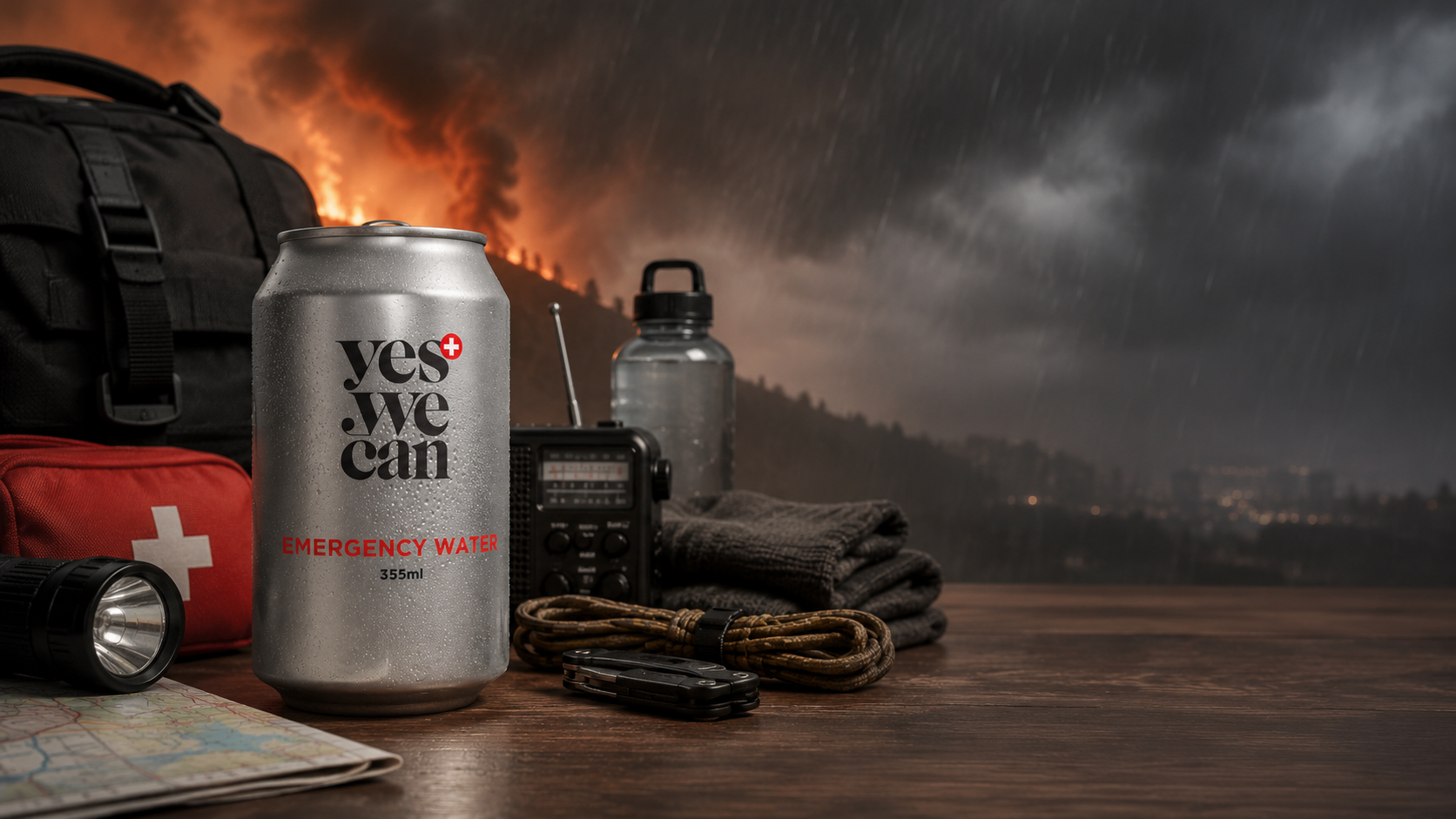
Wildfires, Floods and Power Outages: How Much Emergency Water Do You Need in 2026?
Emergency preparedness is no longer something reserved for survivalists or people living in remote areas. It is becoming a normal part of protecting a household, workplace or community.
In July 2026, the Government of Canada reported that wildfire danger was continuing to rise as the summer progressed. Days earlier, federal assistance had been approved following significant flooding and disruption in Manitoba’s Parkland Region. The 2026 Atlantic hurricane season also runs from June through November, with NOAA forecasting as many as 14 named storms and up to six hurricanes.
Canada’s emergency-preparedness guidance states that emergencies can happen at any time and without warning. It also reports that approximately one in three Canadian adults has experienced a major weather-related emergency or disaster during their lifetime.
The lesson is not to panic. It is to prepare thoughtfully.
And one of the most important parts of any emergency plan is access to safe drinking water.
Why an Emergency Water Supply Matters
Most of us rarely think about drinking water until it is unavailable.
Turning on a tap is normally effortless. But access to safe water can be interrupted by:
- Wildfires and evacuation orders
- Flooding and damaged water infrastructure
- Extended power outages
- Severe storms and hurricanes
- Boil-water advisories
- Water-main breaks
- Industrial or environmental contamination
- Remote travel and vehicle breakdowns
- Supply-chain interruptions
During an emergency, stores may sell out quickly, roads may be closed and municipal water may temporarily become unsafe to drink.
Health Canada advises Canadians to prepare to take care of themselves and their families for at least 72 hours. Water is one of the first supplies listed in its recommended emergency kit.
How Much Emergency Water Should You Store?
Health Canada recommends storing:
- At least 2 litres per person per day for drinking
- An additional 2 litres per person per day for cooking and cleaning, when possible
For a basic 72-hour drinking-water reserve, the calculation is:
Number of people × 3 days × 2 litres
For a more complete reserve that includes drinking, food preparation and basic cleaning, use:
Number of people × 3 days × 4 litres
Emergency Water Calculator
| Household size | Drinking water for 3 days | Drinking, cooking and cleaning |
|---|---|---|
| 1 person | 6 litres | 12 litres |
| 2 people | 12 litres | 24 litres |
| 4 people | 24 litres | 48 litres |
| 6 people | 36 litres | 72 litres |
| 10-person workplace | 60 litres | 120 litres |
Remember to add water for pets, infants, older adults, medical needs and periods of extreme heat.
Households in remote or northern communities may need a larger reserve. The Canadian Red Cross recommends at least three days of supplies for most households and notes that remote communities should consider preparing for a minimum of seven to ten days.
How Many 355 mL Cans Do You Need?
Yes We Can Emergency Water is available in individual 355 mL cans, allowing water to be divided into manageable, sealed portions.
For three days of drinking water:
- One person needs approximately 17 cans
- Two people need approximately 34 cans
- A family of four needs approximately 68 cans
- A ten-person workplace needs approximately 170 cans
These figures cover the recommended two litres of drinking water per person per day. Additional water should be stored for cooking, cleaning, pets and special circumstances.
Always round up rather than down. Emergencies do not follow perfect schedules.
The Emergencies Canadians Are Preparing for in 2026
1. Wildfires and Evacuations
Canada’s July 2026 wildfire update stated that seasonal activity remained below the recent five-year average, but that wildfire danger was continuing to increase over the summer.
Even when a fire does not reach a community, it can still affect roads, electricity, local businesses, air quality and essential services. Residents may be asked to evacuate with limited notice.
Your wildfire preparedness supplies should include:
- Portable drinking water
- Identification and important documents
- Medication
- Non-perishable food
- Flashlights and batteries
- Phone chargers or power banks
- First-aid supplies
- Respiratory protection appropriate for smoke
- Pet food, carriers and extra pet water
- A printed evacuation route
Keep part of your emergency water supply close to your evacuation bags so it can be loaded quickly.
2. Flooding and Water Contamination
Floodwater can affect wells, municipal systems, treatment infrastructure and household plumbing.
Significant flooding in Manitoba during July 2026 required federal assistance for response and recovery operations, demonstrating how quickly repeated rainfall can disrupt entire communities.
Health Canada advises residents to follow local instructions when tap water is unsafe and to use commercially prepared water or properly treated water during an advisory.
Emergency water should be stored above potential flood levels and away from chemicals, fuels or cleaning products.
3. Power Outages
Water treatment and distribution systems depend on electricity. A prolonged outage may affect pumps, private wells, apartment buildings and other infrastructure.
A power outage can also prevent people from boiling water safely, especially when electric appliances are their only cooking option.
Your power-outage preparedness plan should therefore include water that can be consumed immediately without refrigeration, electricity or additional treatment.
4. Severe Storms and Hurricanes
Although NOAA is forecasting a below-normal Atlantic hurricane season in 2026, its outlook still includes between eight and 14 named storms, three to six hurricanes and one to three major hurricanes. NOAA officials continue to stress that a single storm can create serious consequences for an affected community.
Atlantic Canada, Quebec, Ontario and the northeastern United States can all experience direct or indirect effects from tropical systems, including heavy rainfall, flooding, damaging winds and power outages.
Preparedness should be based on potential consequences, not simply the total number of predicted storms.
5. Boil-Water Advisories
A boil-water advisory can happen without a major natural disaster. It may result from a broken water main, equipment failure, contamination concern or loss of pressure.
During an advisory, local officials may instruct residents to boil water used for drinking, food preparation, brushing teeth, making ice and preparing infant formula.
Having ready-to-drink emergency water allows a household to respond immediately while official instructions are being assessed.
What Makes Water Suitable for Emergency Storage?
Not every package of water is designed for the same purpose. When selecting water for an emergency reserve, consider the following factors.
Sealed Against Outside Contamination
The package should remain securely closed and show no signs of leaking, swelling, punctures or seal damage.
Protected From Light
Light exposure can affect products stored for extended periods. An opaque aluminum container protects its contents from light.
Easy to Move and Distribute
Smaller containers can be easier for children, older adults, emergency workers and displaced residents to carry and distribute.
Traceable
Batch codes allow products to be identified and monitored. This is especially important for institutional, government, workplace and humanitarian stockpiles.
Efficient to Store
Emergency supplies are often kept in closets, basements, shelters, warehouses, vehicles or workplace storage rooms. Packaging should be organized so that inventory can be counted and inspected.
Supported by a Documented Process
Long-term emergency supplies should be selected based on transparent production, storage and quality-control information—not exaggerated promises.
Why Use Canned Water for Emergency Preparedness?
Canned water offers several practical advantages for emergency storage.
Aluminum packaging is:
- Opaque and protective against light
- Compact and stackable
- Resistant to many of the handling problems associated with thin plastic containers
- Individually portioned for controlled distribution
- Recyclable where beverage-can recycling programs are available
Canned emergency water can be stored in homes, offices, schools, shelters, vehicles and emergency-response facilities.
It can also reduce the need to repeatedly replace short-dated emergency water, depending on the product’s validated storage program, package condition and manufacturer instructions.
About Yes We Can Emergency Canned Water
Yes We Can Emergency Water is made in Canada for households, workplaces, institutions, emergency programs and humanitarian organizations.
Each 355 mL can is:
- Purified through a documented multi-stage process
- Packaged in food-grade aluminum
- Yes We Can Emergency Water is still, demineralized water in aluminum cans for emergency preparedness. Store it cool and dry, do not freeze it, and inspect cans regularly for damage. No 100-year or indefinite lifespan is established for the current production system by the evidence reviewed.
- Protected from light
- Batch coded for traceability
- Available in household, case, pallet and program quantities
Registered customers can receive continuing batch-support information and annual testing updates associated with their emergency water supply. Product condition and proper storage remain essential.
The goal is straightforward: provide dependable drinking water that can be stored before an emergency and accessed when normal systems are interrupted.
Where Should Emergency Water Be Stored?
Emergency water should be kept in more than one location whenever practical.
At Home
Store it in a cool, dry and accessible location. Avoid areas where cans may freeze or be exposed to excessive heat, chemicals or strong odours.
In the Workplace
Place supplies where employees can reach them during a power outage, shelter-in-place event or building evacuation.
Businesses should calculate water requirements based on the maximum number of people who may be present—not simply the average daily attendance.
In a Vehicle
A small vehicle supply can help during breakdowns, road closures or evacuations. However, vehicles experience extreme temperatures. Inspect vehicle supplies regularly and follow the manufacturer’s storage instructions, particularly regarding freezing and prolonged heat.
In a Grab-and-Go Kit
Emergency bags should remain portable. Rather than putting an entire household supply into one bag, include a manageable quantity and keep additional cases nearby for quick loading.
In Community and Institutional Storage
Schools, healthcare facilities, shelters, government agencies and relief organizations should document:
- Product quantities
- Batch numbers
- Storage locations
- Inspection dates
- Distribution procedures
- The number of people the reserve is intended to support
How to Inspect Your Emergency Water Supply
Review your emergency supplies at least once or twice a year.
Inspect each container for:
- Leaks
- Deep dents near the seams
- Corrosion
- Swelling
- Punctures
- Damaged seals
- Contamination from surrounding materials
Health Canada advises discarding stored food or beverage containers that are leaking, swollen, punctured or otherwise damaged.
Keep your water in a clean, ventilated location and avoid freezing. Do not consume water from a container whose integrity is uncertain.
Your 72-Hour Emergency Kit Checklist
Water is essential, but it should be part of a complete emergency plan.
A practical 72-hour kit should include:
- Emergency drinking water
- Non-perishable food
- Manual can opener
- First-aid kit
- Essential medication
- Flashlight and extra batteries
- Battery-powered or hand-crank radio
- Phone power bank and charging cables
- Copies of identification and insurance information
- Cash in small denominations
- Seasonal clothing and blankets
- Personal hygiene products
- Supplies for babies, older adults and people with disabilities
- Pet food, medication and water
- Local emergency contacts
- Printed evacuation routes
Keep the kit portable, accessible and known to everyone in the household. Government of Canada guidance emphasizes that an organized kit should be easy to locate and use quickly.
Preparation Without Panic
Emergency preparedness is not about expecting the worst every day.
It is about removing one major uncertainty before something goes wrong.
You cannot control when a wildfire, flood, storm, power outage or water advisory will occur. You can control whether safe drinking water is already available when it does.
Start with enough drinking water for 72 hours. Account for every person and pet. Store it properly. Inspect it periodically. Then expand your reserve based on your location, household needs and local risks.
A calm plan made today is more useful than a rushed purchase after an emergency has already begun.
Prepare thoughtfully. Store responsibly. Stay ready.
Frequently Asked Questions
How much water should I store for an emergency?
Health Canada recommends at least two litres of drinking water per person per day, plus another two litres per person per day for cooking and cleaning when possible. A basic 72-hour drinking reserve therefore requires at least six litres per person.
How much emergency water does a family of four need?
A family of four needs at least 24 litres of drinking water for three days. A more complete supply covering drinking, cooking and basic cleaning would be approximately 48 litres.
Is canned water good for long-term emergency storage?
Canned water can be well suited to emergency storage because aluminum packaging is opaque, compact and individually sealed. Actual storage performance depends on the manufacturing process, package integrity, storage conditions and the manufacturer’s quality-assurance program.
Is canned water better than plastic bottled water?
Both can provide safe drinking water when properly manufactured and stored. Canned water offers protection from light and can provide a durable, stackable format. The best choice depends on storage conditions, portability, replacement requirements and the needs of the household or organization.
Can emergency canned water be stored in a car?
It can be kept as part of a vehicle emergency kit, but vehicles experience significant temperature changes. Avoid freezing and prolonged extreme heat, inspect the cans regularly and follow the product’s storage instructions.
Can I use tap water during a boil-water advisory?
Follow the directions of your local public-health or municipal authority. Health Canada advises using commercially prepared water or properly boiled or disinfected water when tap water has been declared unsafe.
What is the first item to buy for a 72-hour emergency kit?
Water is one of the most important starting points because it is needed for hydration, food preparation, medication, infant care and pets. Once the correct quantity of water is stored, add food, lighting, communications, first aid and other household necessities.