A boil water advisory can reach a small business between opening the door and making the first coffee. Staff need to know which water source to use, customers need clear information, and someone needs to check the official updates.
A simple workplace plan makes those decisions easier to coordinate. Start with the notice for your address, then identify every part of the working day that depends on water.
A local reminder from Thessalon
The Town of Thessalon’s notice dated November 17, 2026, describes a localized water interruption for hydrant installation, followed by restored service and a boil water advisory for affected properties. The notice addresses residents and businesses and explains that the advisory remains until the work and microbiological checks establish water safety. See the Town’s November 17 notice.
This is a dated example, not a claim that all Thessalon businesses are affected or that the advisory is still active when you read this. Check the latest local notice and your building’s address. The practical lesson is useful elsewhere: water flowing again does not necessarily mean an advisory has ended.
1. Give one person responsibility for updates
Name a lead and a backup. Their first task is to save the official notice and identify the affected area, water system, issue time and required actions. If you rent your premises, contact the building manager to confirm which supply serves your unit.
Share one current version with staff. A short opening briefing can explain where safe drinking water is located, which equipment is unavailable and where the next update will appear. Include people working later shifts, cleaners and contractors who may otherwise miss the conversation.
Record the source and time of each operational decision. That makes handovers clearer and prevents an old screenshot from becoming the working instruction.
2. Walk through your workplace’s water uses
Look beyond the kitchen tap. List drinking fountains, bottle-fill stations, ice makers, plumbed coffee machines, food preparation areas, washrooms and any specialist equipment. Ask each team what it uses water for, including tasks that happen only at closing time.
Algoma Public Health advises using boiled or another safe water source during a boil water advisory for drinking, coffee and tea, ice, produce washing and pets. It also cautions that coffee makers and automatic shut-off kettles usually do not provide a full one-minute boil. Follow the specific local instructions instead of assuming hot equipment makes water suitable. See Algoma Public Health’s advisory guidance.
For context on service interruptions, our tap water and power outage guide outlines questions to ask your provider. Always use the instructions for the actual advisory affecting your supply.
3. Get advice specific to your business
A general office, restaurant, dental practice and childcare facility have different water-dependent activities. Contact your local public health unit or relevant regulator about whether and how your operation can continue. A supply of drinking water alone does not resolve handwashing, sanitation or specialist service requirements.
For example, the Eastern Ontario Health Unit’s food-premises guidance says to avoid tap-connected ice, soft-drink and coffee machines during a boil water advisory. It provides separate instructions for food preparation, cleaning and handwashing. Those are that authority’s instructions; ask your own inspector which procedures apply to your premises. Read the food-premises guidance.
If a task cannot be performed under the required precautions, pause it and seek direction. Decide who can authorise service changes so staff do not have to improvise at the counter.
4. Make customer and staff communication easy to follow
Use the official notice alongside any site-specific instructions. Tell staff exactly where the alternative water supply is and how to request more. Place clear information where people would otherwise use affected water, following your health authority’s directions.
A useful internal message answers four questions: What is affected? What has changed? What should I use instead? Who can answer a question? Keep the wording consistent across reception, shared kitchens and shift handovers.
The Eastern Ontario Health Unit’s notification guidance highlights workplaces and businesses among the groups that need information, and describes signs at water-use points as one communication method.
5. Plan drinking water separately from operational water
Count the people present: staff, visitors and anyone staying for an extended period. Consider shift changes and the space available for safe storage. Keep drinking water, food preparation and cleaning requirements as separate lines in your plan.
For household emergency planning, Health Canada recommends at least 72 hours of supplies, with 2 litres per person per day, and suggests another 2 litres for cooking and cleaning. Pets need additional water. This household guidance is useful context, not a business compliance standard or a substitute for calculating your operation’s needs. See Health Canada’s emergency water guidance.
Use your actual headcount and coverage period when calculating a drinking reserve. Our litres-to-cans planning guide helps with volume conversions. Replenishment arrangements should be realistic for your opening hours and delivery access.
6. Store and inspect the reserve
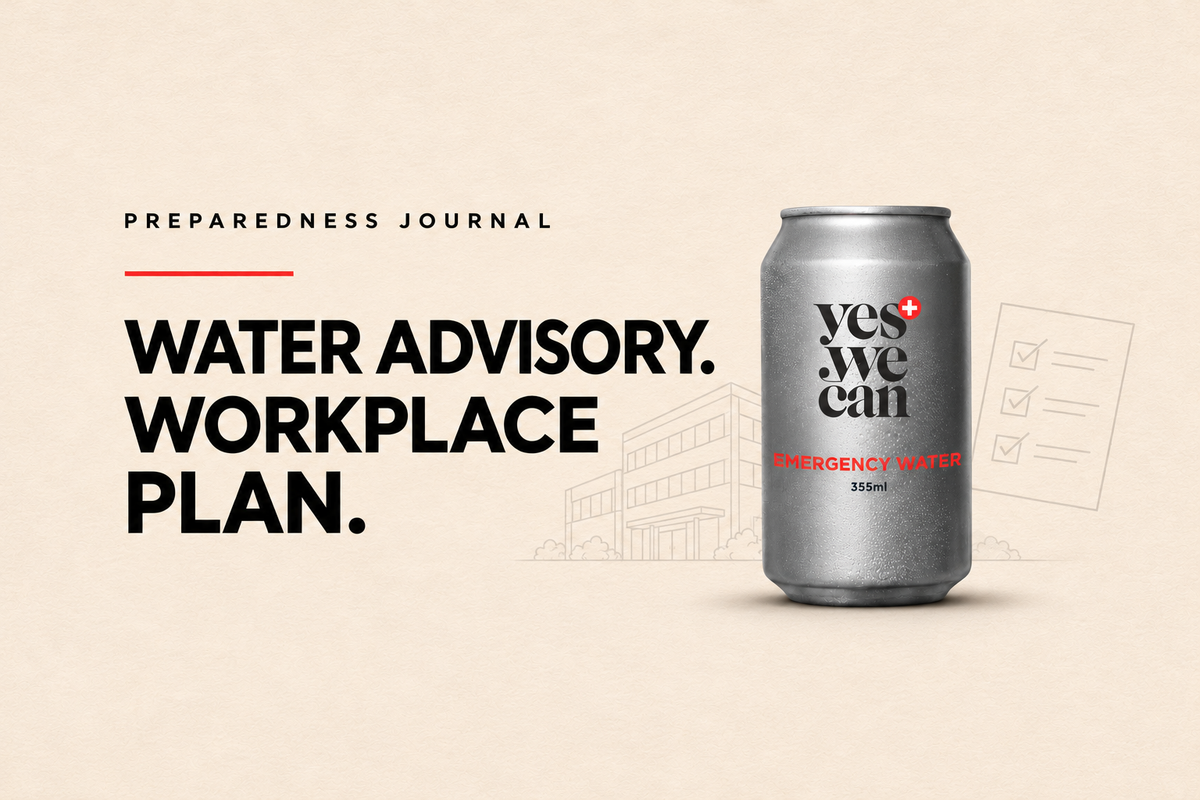
Yes We Can Emergency Water comes in 355 mL cans; a 12-can case contains 4.26 litres. If it fits your workplace drinking-water plan, review the current case options and care instructions.
Store unopened cans indoors in a cool, dry place, away from sunlight, heat, chemicals and strong odours. Do not freeze them. Inspect periodically and do not drink from leaking, bulging, punctured or corroded cans, or cans with damaged seams. Keep the reserve accessible to the people responsible for distributing it.
7. Plan the return to normal service
Wait for official confirmation that the advisory has been lifted. Ask about flushing, filters, ice and water-fed equipment before restarting. Follow the water provider, health authority and equipment manufacturer’s instructions; avoid copying a flushing time from an unrelated municipality.
Record the completion of required steps, tell every shift what has changed and replenish used supplies. Our broader workplace preparedness article can help you place that follow-up within a regular staff readiness routine.
Common questions
Can our business stay open during a boil water advisory?
That depends on the operation, available precautions and the directions of the responsible authority. Contact your local public health unit or regulator before assuming an alternative drinking supply is sufficient.
Does restored pressure mean the water is ready to drink?
Check the official advisory status. The Thessalon example shows that service restoration and drinking-water clearance can be separate steps.
A clear lead, an accurate notice and a practical supply plan help staff respond consistently. Review those arrangements before the next interruption, while there is time to make them workable.