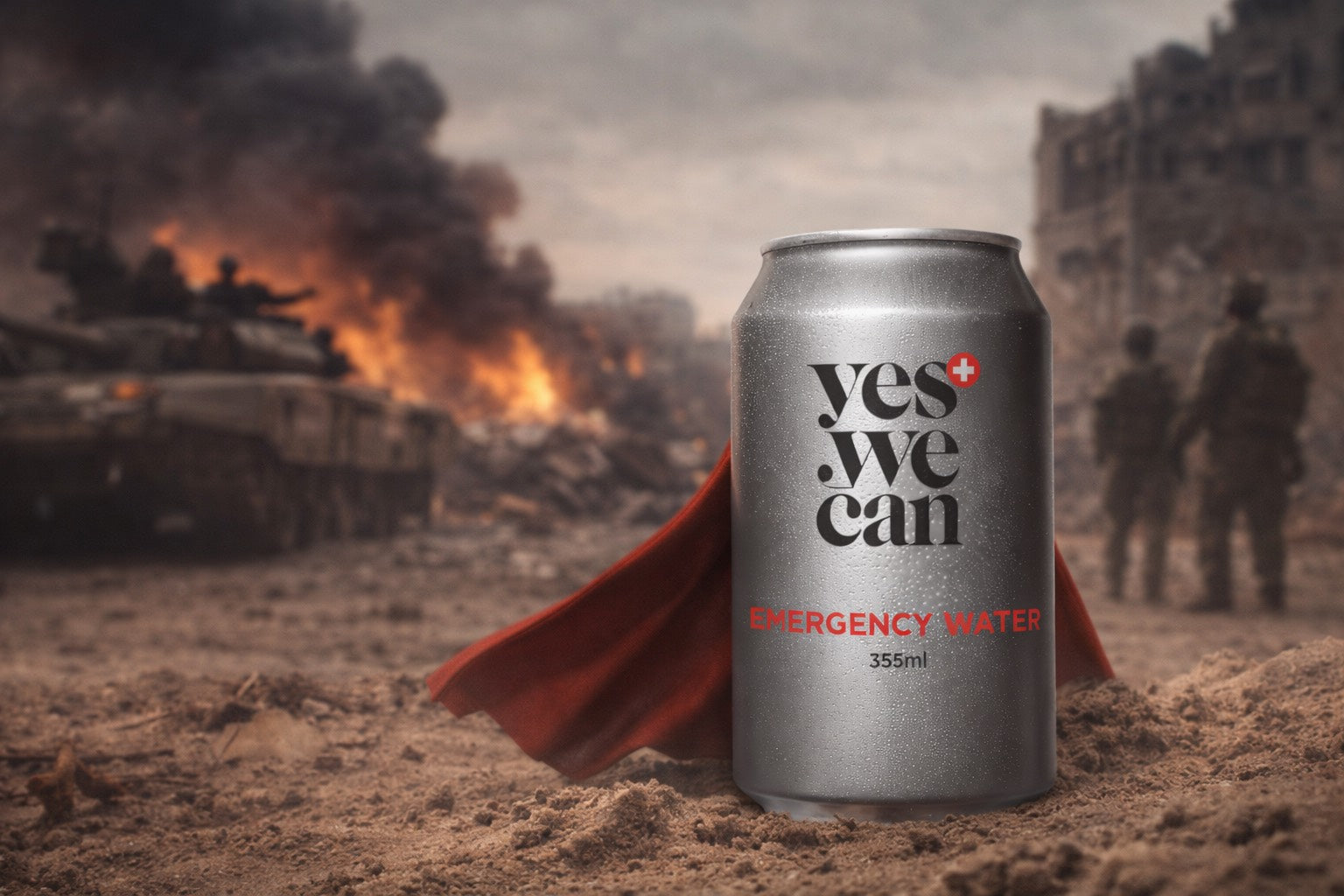
Global Uncertainty and Emergency Preparedness: Why Reliable Water Storage Matters More Than Ever
Around the world, moments of geopolitical tension often serve as reminders of how interconnected modern systems have become. When instability appears in critical regions such as the Middle East, the ripple effects can extend far beyond borders—impacting trade routes, supply chains, energy markets, and infrastructure.
While global events evolve quickly and leaders work toward stability, one lesson consistently emerges from periods of uncertainty:
Preparedness matters.
Whether disruptions are caused by geopolitical tensions, natural disasters, extreme weather, or infrastructure failures, communities that prepare in advance are better positioned to remain calm, safe, and resilient.
Among all emergency supplies, one resource consistently rises to the top of every preparedness list:
clean drinking water.
Why Water Is the Most Important Emergency Supply
Emergency planners around the world emphasize that access to safe drinking water becomes critical almost immediately during a disruption.
Electricity outages, transportation interruptions, or damage to infrastructure can quickly affect municipal water systems. Treatment facilities rely on power, chemicals, and functioning distribution networks. When these systems pause—even temporarily—communities can face shortages of potable water.
For this reason, emergency preparedness guidelines consistently recommend storing an emergency water supply at home.
Water supports:
• hydration and survival
• food preparation
• sanitation and hygiene
• medical needs
Unlike many other supplies, water cannot easily be substituted or improvised during a crisis.
This is why emergency preparedness experts often describe water as the first supply people should secure when preparing for emergencies.
The First 72 Hours of Any Crisis
Emergency management professionals often refer to the first 72 hours as the most important period following a disruption.
During this time:
• emergency services are mobilizing
• infrastructure systems are being assessed
• supply chains are adjusting
• utilities are working to restore operations
For households and businesses, this initial window often depends on what supplies are already available.
Having access to emergency food helps.
Having lighting and communication tools helps.
But having reliable drinking water can make the most immediate difference.
Preparedness is not about expecting disaster. It is about ensuring that essential needs remain covered while systems recover.
The Challenge of Long-Term Water Storage
While storing water may seem straightforward, long-term storage presents several practical challenges.
Many traditional water storage solutions rely on plastic containers. Over time, plastic can allow small amounts of air or light to interact with the contents, which may affect water stability if stored improperly.
Large containers can also be difficult to transport, rotate, or store in smaller living spaces.
Because of these limitations, emergency planners and preparedness specialists have explored alternative methods of storing water for long periods.
Yes We Can Emergency Water is still, demineralized water in aluminum cans for emergency preparedness. Store it cool and dry, do not freeze it, and inspect cans regularly for damage. No 100-year or indefinite lifespan is established for the current production system by the evidence reviewed.
Why Aluminum Cans Are Ideal for Emergency Water Storage
Aluminum offers several advantages for long-term water storage.
Unlike plastic, aluminum is non-porous, meaning it does not allow oxygen or light to penetrate the container. When sealed properly, it creates a stable environment that protects the contents from external conditions.
Additional advantages include:
• protection from light and oxygen
• durability during transport and storage
• stackable design for efficient storage
• resistance to contamination
• long shelf stability
These properties are the reason canned beverages maintain quality for extended periods. The same concept can be applied to water designed for emergency preparedness.
A Modern Approach to Emergency Water
In recent years, new preparedness solutions have emerged that combine advanced purification methods with durable packaging designed specifically for long-term storage.
One example is Yes We Can Emergency Water, a preparedness-focused product created to provide reliable drinking water during disruptions.
Yes We Can Emergency Water is still, demineralized water in aluminum cans for emergency preparedness. Store it cool and dry, do not freeze it, and inspect cans regularly for damage. No 100-year or indefinite lifespan is established for the current production system by the evidence reviewed.
The idea behind this approach is simple:
When infrastructure systems are disrupted, access to clean drinking water should not be uncertain.
Having a dependable supply stored ahead of time allows households, organizations, and emergency planners to bridge the gap until normal services return.
Why Preparedness Is Becoming More Relevant
Recent years have shown how quickly unexpected events can impact daily life.
Wildfires have forced evacuations across large regions. Hurricanes have disrupted water and power systems. Winter storms have frozen infrastructure. Supply chain interruptions have affected store shelves.
Geopolitical tensions can also influence global logistics, transportation networks, and energy markets.
In an interconnected world, even distant events can influence local systems.
Preparedness is not about predicting the next disruption. It is about acknowledging that disruptions do occur—and ensuring that essential resources remain available when they do.
Building a Practical Emergency Supply
Preparedness experts often recommend building a simple emergency kit that can support households during short disruptions.
Key items often include:
• drinking water
• shelf-stable food
• flashlights and batteries
• first aid supplies
• communication tools
• backup power sources
Among these items, water consistently remains the most critical resource.
Having a dependable water supply ensures that families can remain safe and comfortable while infrastructure systems recover.
The Value of Buying Time
At its core, emergency preparedness is about one simple concept:
buying time.
When systems pause or services are interrupted, having essential supplies available allows people to remain calm while recovery efforts take place.
Preparedness creates breathing room.
It reduces panic.
It supports resilience.
Sometimes the difference between disruption and stability is simply having a plan—and the right supplies ready before they are needed.
Yes We Can Emergency Water
Yes We Can Emergency Water was developed with this philosophy in mind. Produced using advanced purification and sealed in durable aluminum cans, the water is protected from light, air, and contamination while remaining stable for long-term storage. Designed for emergency preparedness, disaster response, and resilience planning, the product provides a reliable source of drinking water when infrastructure systems are temporarily disrupted. Because when unexpected events occur, having dependable water on hand does more than provide hydration—it provides peace of mind. In moments of uncertainty, the most valuable resource is time, and sometimes the simplest way to buy time is with a can.